
Why Can’t I Get Rid of This Verruca?

You’ve tried the pharmacy treatments, picked at it endlessly, covered it with duct tape, filed it down, frozen it at home… and yet your verruca is still there.
If this sounds familiar, you’re certainly not alone. Verrucas can be surprisingly stubborn, and many people are frustrated by how long they can last. Some disappear within a few months, while others seem determined to stay for years.
So why are some verrucas so difficult to get rid of?
If you are a parent looking to treat a verruca on your child's foot and it's been there less than 6 months and isn't causing any pain - STOP.

First of all – what actually is a verruca?
A verruca is a type of wart found on the foot, caused by the Human Papilloma Virus (HPV). The virus enters through tiny breaks in the skin and infects the outer layer.
Because they develop on weight-bearing areas of the feet, verrucas are often pushed inward by pressure when walking or standing. This can make them painful and more difficult to treat than warts elsewhere on the body.
They may appear:
Flat or cauliflower-like
White, yellow or flesh coloured
With tiny black dots (small blood vessels)
Tender when squeezed from the sides/pinched (rather than it is pushed directly on - more likely a corn)
Alone or in clusters (“mosaic verrucae”)
Your immune system plays a huge role
One of the biggest reasons verrucas persist is that treatment is not just about destroying the skin lesion — it’s about encouraging your immune system to recognise and fight the virus.
Some people naturally clear HPV very quickly. Others do not mount a strong immune response, which means the verruca can remain dormant and persistent for a long time.
Factors that may affect this include:-
Stress
Illness
Fatigue
Certain medications
Immune suppression
Smoking
Poor circulation
Diabetes
Skin conditions affecting the feet
This is why two people can have identical verrucas but completely different treatment outcomes.
There is some evidence that taking a zinc supplement can be helpful in giving your immune system a swift kick up the bum. Oral Vitamin C may also be a good idea if you are deficient.
Home treatments often don’t go deep enough
Many over-the-counter verruca products contain salicylic acid or use a basic freezing method. While these treatments can work well for some people, they are often: -
Used inconsistently
Stopped too early a skin cycle in a healthy person is 28 days
Not strong enough
Unable to penetrate thick skin on the feet
A verruca hidden beneath layers of hard skin can become protected from treatment. If thick callus is not reduced regularly, the active ingredients may never properly reach the infected tissue.
You may actually be spreading it yourself
This is more common than people realise.
Picking, scratching, shaving or aggressively filing a verruca can spread viral particles to surrounding skin. Sharing towels, walking barefoot in communal areas or using the same nail files on unaffected skin may also contribute to spreading.
Sometimes what appears to be “one verruca getting bigger” is actually multiple verrucas developing together. Footwear needs to be treated! HPV (the virus that causes verruca and warts) is highly resilient and can persist in warm, moist environments like used socks and shoes. A normal wash (30 or 40 degrees) won't be hot enough to kill the viral particles in the skin squames (dead skin) - wash at a minimum of 60 degrees (sorry, Environment). The virus can survive on surfaces (i.e. footwear) for several days. 70% alcohol kills most viruses and can be used on footwear to help prevent the cycle of reinfection.
Not every “verruca” is actually a verruca
Some skin lesions are frequently mistaken for verrucas, including: -
Corns the most common misdiagnosis
Callus
Foreign body reactions
Cysts
Vascular lesions
If you’ve been treating something for months with no improvement, it’s worth having it professionally assessed to confirm the diagnosis.
Why professional treatment may help
Podiatrists can assess: -
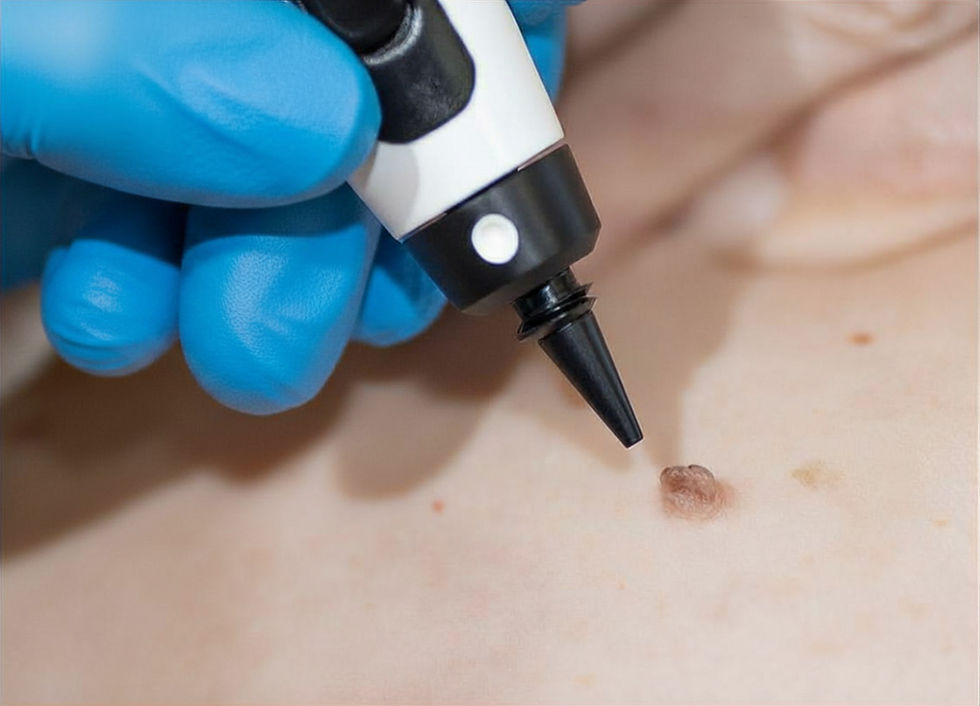
Whether it truly is a verruca (dermoscopy is used at Oxfordshire Chiropody & Podiatry)
The depth and size of the lesion
Your medical history
Circulation and healing ability
The most suitable treatment options
Professional treatment at Oxfordshire Chiropody & Podiatry may include: -
Verruca debridement
Prescription-strength topical treatments
Offloading painful areas (deflective insoles issued)
Advice to stimulate immune response
No treatment can guarantee complete clearance, because individual immune response varies greatly. However, professional treatment can often improve comfort, reduce spread and increase the likelihood of successful resolution.
The frustrating truth: verrucas can take time
Unfortunately, there is no universally “perfect” verruca treatment. Even effective therapies may require multiple sessions, and some verrucas are simply more resistant than others.
Persistence, correct diagnosis and choosing the right treatment approach are usually the key factors.
When should you seek professional advice?
You should consider an assessment if: -
Your verruca is painful
It is spreading
You have diabetes or poor circulation
You are immunocompromised
You are unsure whether it is a verruca
Home treatment has failed
It is affecting sport, walking or daily activities
Final thoughts
Verrucas are common, contagious and often stubborn — but that does not mean you have to simply “live with it”.
If your verruca refuses to go away, there is usually a reason. A professional assessment can help identify why it persists and which treatment options may give you the best chance of success.

Comments